




Google has picked out six early projects that developers and hobbyists built with Gemini 4 Hydrogen, the fast model it launched earlier this month. The demos include 3D scenes, animations and one multi-agent build. Hydrogen also runs in the Gemini app and Google Search, so the showcase gives Android users a sense of what the model they're now using can do.
The roundup ran on Google's Keyword blog on November 23, 2026. Google describes Hydrogen as a model built for quick execution in agentic workflows. It can handle everyday work by itself, or act as the fast execution engine alongside Gemini 4 Carbon, Google's larger model, when several models split a task.
The six projects

Each project comes from a builder on X. Google highlighted them as examples of how fast and how capable Hydrogen is at visual, code-driven work:
- A rainy sci-fi skyline: @kimmonismus coded a sci-fi trip through a Three.js cityscape. They used Hydrogen at its high thinking setting inside Google Antigravity, the company's agentic coding environment.
- A seaplane flight from morning to night: @LuminaBench built a flight over the sea in which the scene moves from daytime to night along the way.
- A blocky koi pond: @IamEmily2050 used Hydrogen in the regular Gemini app to make a 3D voxel koi pond with a red pagoda, cherry blossoms and bridges lit by lanterns.
- A jelly-like koi pond: @notjazii made a softer version of the same idea, swapping the hard edges for squishy, gel-like shapes.
- An interactive ruby-red moth: @thtbee_ paired Google's two newest models in Antigravity. Gemini 4 Carbon directed a “/swarm” of Hydrogen workers to build an animated crimson moth that reacts to clicks, with atmospheric visuals and sound. Hydrogen then recorded the demo video too.
- A desert ranch, old model vs. new: @Bhavani_00007 ran the same animated 3D desert ranch prompt on Gemini 3.8 Flash and on Hydrogen. According to Google, Hydrogen produced the scene in under a minute.
The moth project stands out most. It shows the setup Google is pitching for Gemini 4: Carbon plans and coordinates the job, while a group of cheaper, faster Hydrogen instances does the work in parallel.
What Gemini 4 Hydrogen is
Google introduced Hydrogen on November 12 as the speed-focused member of the Gemini 4 family. Carbon handles the hardest problems, and Argon is the large general-purpose model in between. Google AI's announcement said Hydrogen beats Argon on the Artificial Analysis Intelligence Index at its default thinking level, and runs at 2.5 times the speed of Gemini 3.8 Flash, the model it replaces.
Hydrogen has adjustable thinking levels, so developers can trade speed for more reasoning, plus a 1 million-token context window. Alongside the launch, Google added an Orchestrator tool to Antigravity that switches between Gemini models automatically in multi-model workflows. That's the same Carbon-plus-Hydrogen pairing behind the moth demo.
The model also reaches beyond chat and coding. In a separate post on the Google Developers Blog, the company said Hydrogen brings the spatial and embodied reasoning from its Gemini Robotics ER 2 models into the main Gemini 4 line. Google says Hydrogen beats ER 2 on spatial reasoning tasks in the public ERQA benchmark, and it now recommends Hydrogen to developers using ER 2.
Where you can use it
As of November 24, 2026, Hydrogen is available in Google's consumer, developer and enterprise products:
- Gemini app: Anyone can pick Hydrogen from the model drop-down. Free users also get it through automatic model selection when Gemini decides it's the right model for a prompt.
- Google Search: Hydrogen powers some Search features, according to Google.
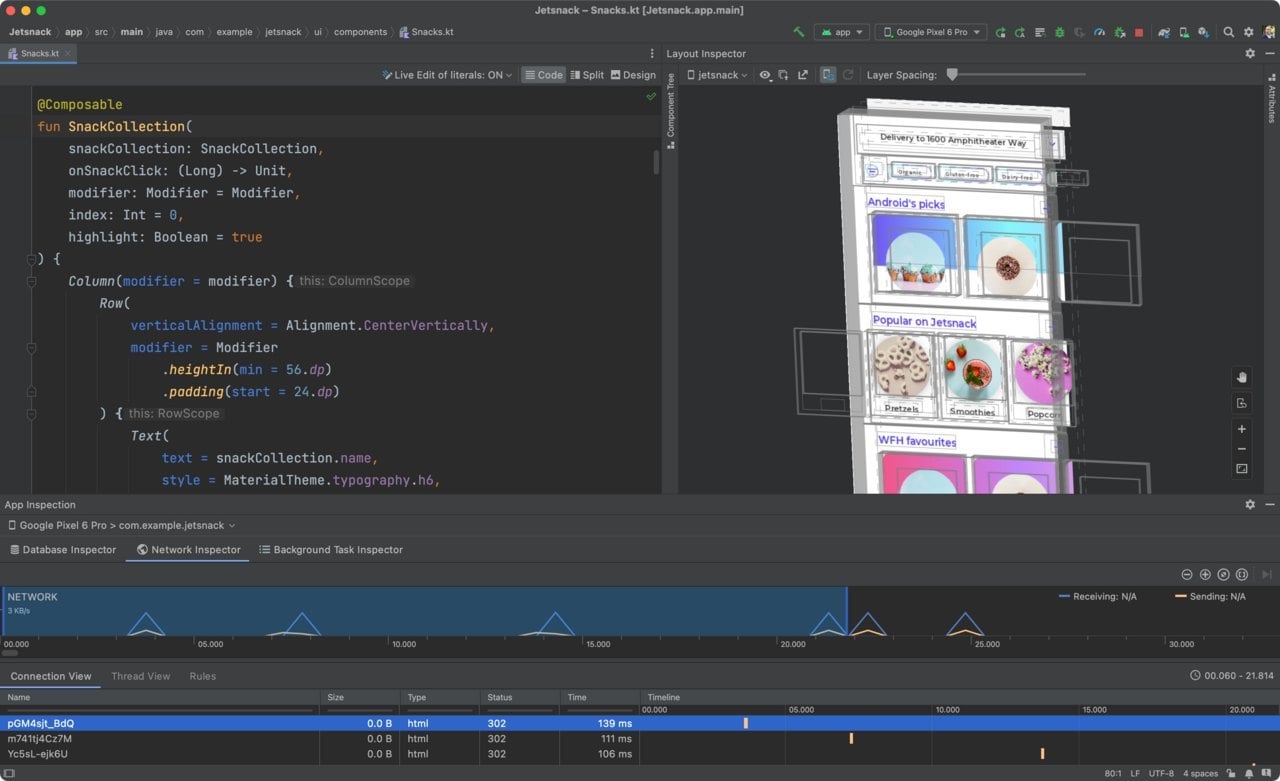
- Developers: The model is available through the Gemini API in Google AI Studio and Android Studio, under the model ID gemini-4-hydrogen.
- Google Antigravity: Paid Google AI Pro and Ultra subscribers can use it there.
- Business: Enterprise teams can get it through Gemini for business.
For Android developers, Android Studio support is the key detail. Hydrogen's speed and lower cost make it a practical default for everyday coding help inside the IDE. Teams that need deeper reasoning can still hand larger jobs to Carbon.
Google hasn't said whether it will feature more community projects. Its push toward agent swarms and model orchestration in Antigravity suggests more multi-model demos like the moth are on the way. Gemini app users on Android can try the same kinds of prompts today by choosing Hydrogen from the model menu.